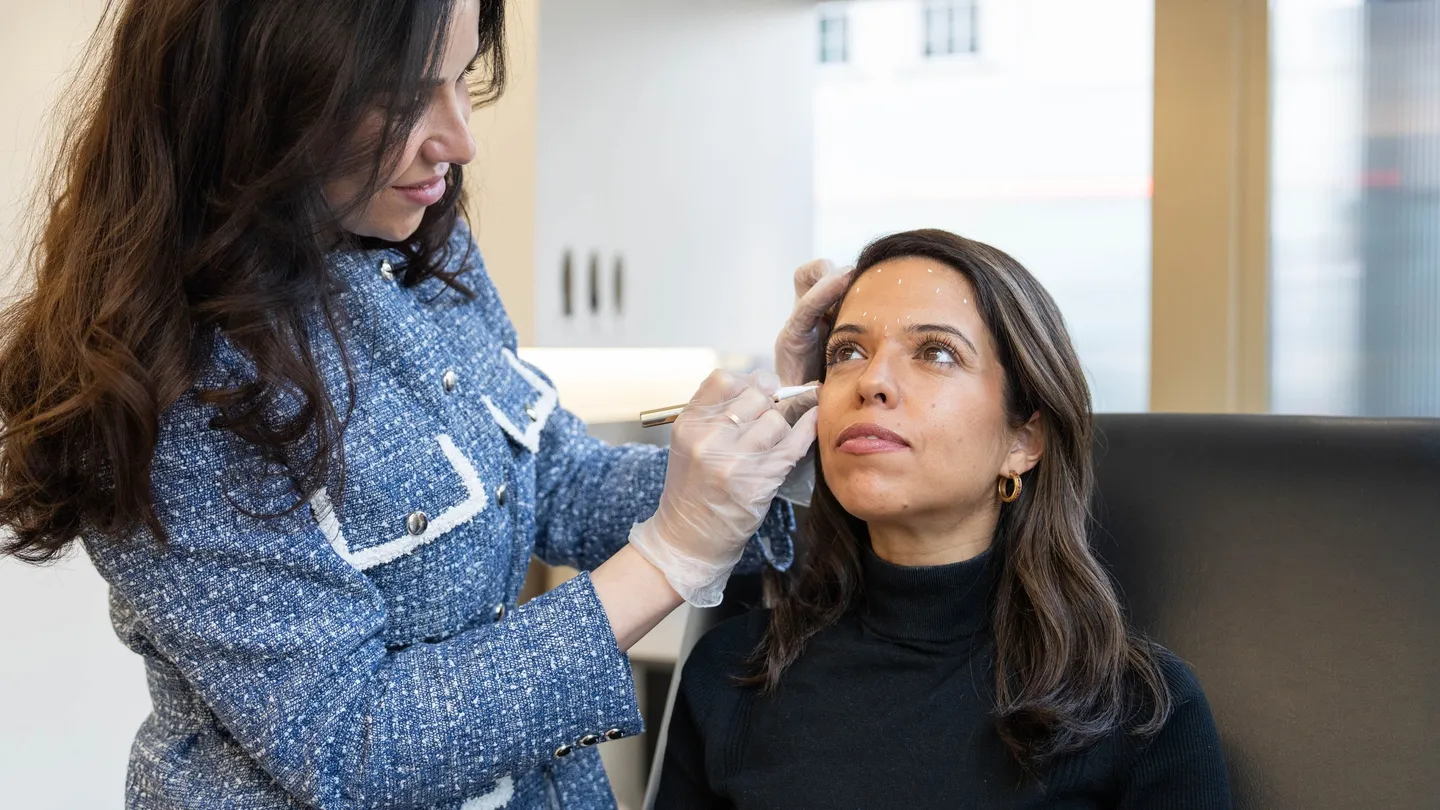
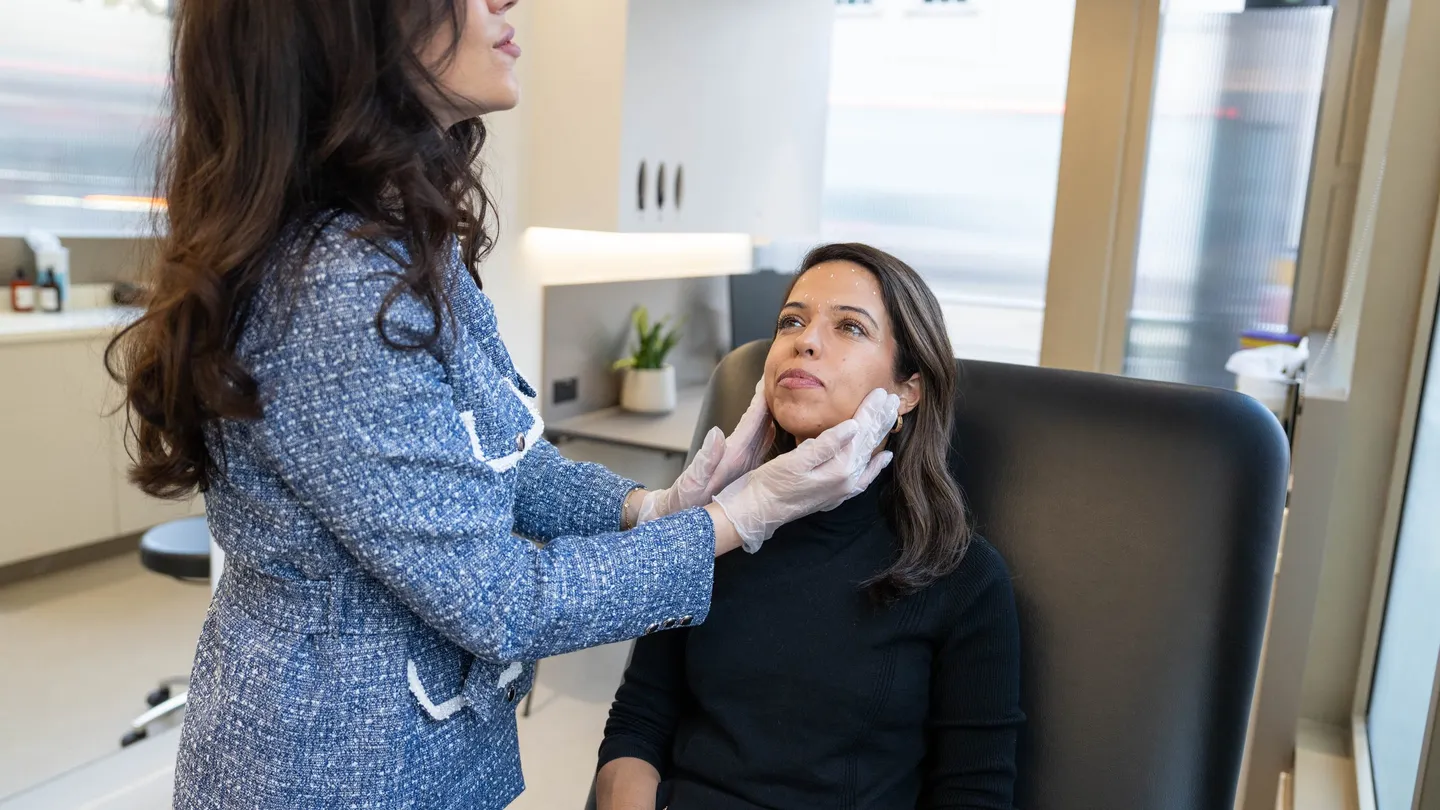
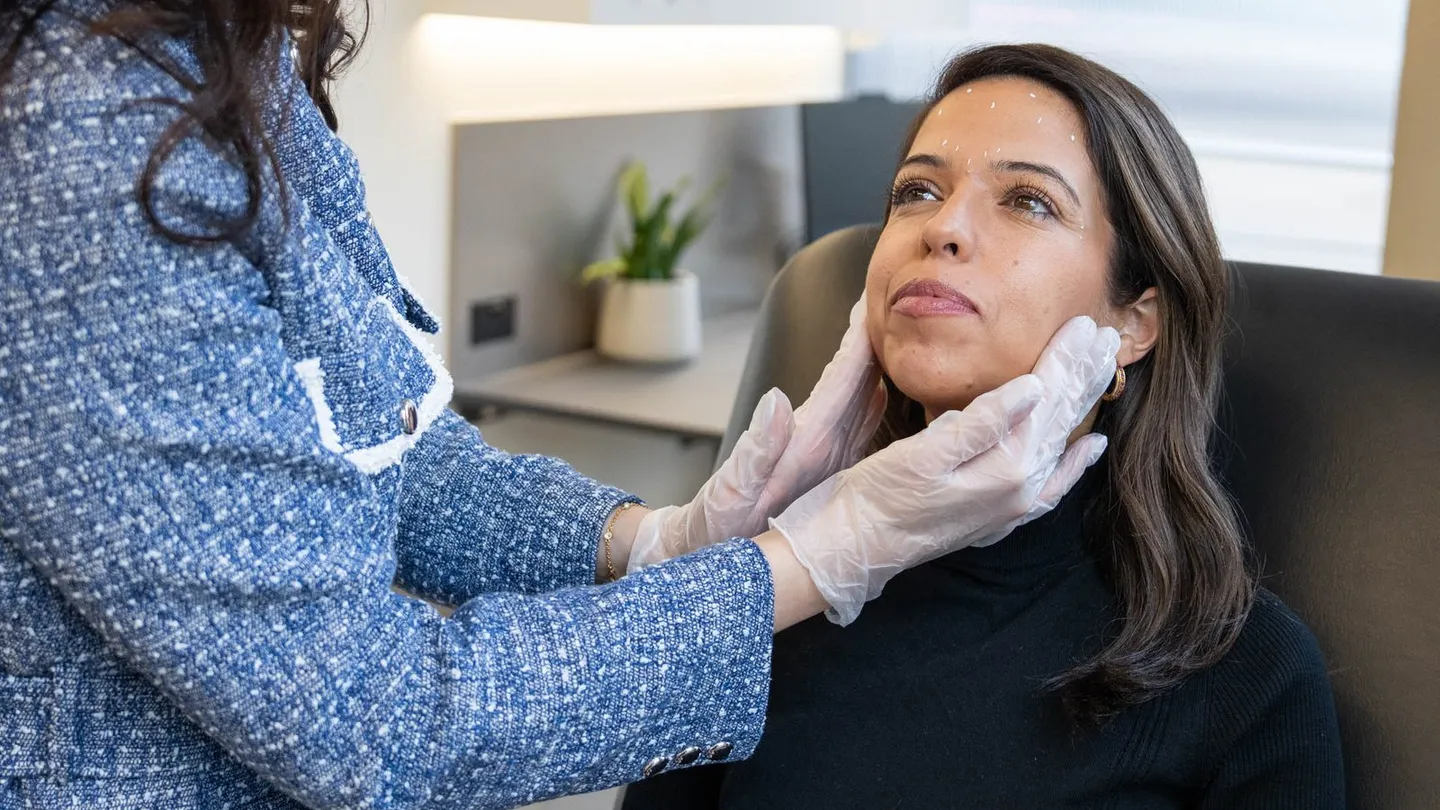
The bumps settle within hours
Each deposit leaves a small raised bleb that flattens within a few hours, occasionally by the next morning. Leave them alone rather than massaging them.
Polynucleotides Marylebone connects you with registered practitioners who give polynucleotide injections at UNTIL Marylebone, 1 Orchard Street, W1H 6HJ, a skin treatment that fills nothing and instead prompts the cells already in your skin to rebuild it.

The short answer
Almost every injectable treatment works by putting something into your face that occupies space. Filler adds volume where volume has gone. Skin boosters hold water in tissue that has dried out. In each case the substance is doing the work, and when the substance goes, so does the effect.
Polynucleotides work the other way round. They are chains of nucleotides, the same molecular units that make up DNA, purified from salmon or trout, which is why you may have seen them called the salmon sperm injection. Placed into the dermis they act as a signal: they wake up the fibroblasts already living in your skin, the cells whose job is to manufacture collagen and elastin, and which slow down steadily from your mid-twenties onwards.
The collagen that results is your own, made by your own cells, over about eight weeks. That is why nothing much happens for the first fortnight, why the course is spaced out across three sessions, and why the honest description of the outcome is better skin rather than a changed face.
Polynucleotides suit adults whose skin itself has changed: thinner, drier, more finely lined or duller than it was. Most people who ask about them are between their late twenties and their seventies. An assessment should say plainly when the problem is something else and point you to the treatment that fits.
The fine, papery quality that shows first under the eyes, on the neck and on the backs of the hands.
Lines that sit in the surface of the skin at rest, as opposed to folds or lines that only appear when you move.
Skin that has lost its light and holds water poorly, with no single line to point at.
Skin that tolerates resurfacing badly, where a treatment that asks for no injury is the gentler start.
Thin, crepey skin and the blue-grey cast of vessels showing through it. Polynucleotides under the eyes explains why a hollow needs a different answer.
Dullness, dehydration and fine surface texture across the cheeks and forehead. See polynucleotides for the face.
Crepey texture and fine horizontal lines, which respond more slowly than the face. See polynucleotides for the neck.
Thin skin on the backs of the hands, as distinct from the volume loss that makes veins stand proud. See polynucleotides for hands.
The scalp tissue that each follicle sits in, alongside the treatments with the strongest evidence. See polynucleotides for hair loss.
Some shallow scarring, usually as one part of a plan led by resurfacing. See polynucleotides for acne scars.
A nucleotide is one of the units that DNA is built from, and a polynucleotide is a chain of them. The material used in these treatments is purified from the soft roe of salmon or trout, chosen because its structure is close enough to human DNA to be biologically compatible. It is not a stem cell treatment, it does not alter your DNA, and a known fish allergy is a genuine reason not to have it.
They hold water. The chains bind water and form a hydrating scaffold in the dermis, which is the part of the effect that shows first.
They signal the fibroblasts. These are the cells that make collagen and elastin, and they grow less active with age. Polynucleotides prompt them back into production, and there is also good evidence they improve local circulation and calm inflammation. Because your own cells do the building, the result takes about eight weeks.
Volume loss of any kind, skin that has descended, established pigmentation, deep folds and lines made by muscle movement all sit outside this treatment. Proposing it for any of those is treating the wrong problem, and it is the most common reason people are disappointed by a course.
Crepey skin is skin that has thinned and lost collagen and elastin until it wrinkles finely, like crêpe paper, and stays creased for a moment after a gentle pinch. It shows first where skin is thinnest or has seen the most sun: under the eyes, on the neck and chest, and on the backs of the hands. Because it is a problem of the skin itself, it is squarely what polynucleotides are for, and the pages on the under-eyes, the neck and the hands cover each area.
Crepey skin is different from skin that sags. Loose skin that hangs, on the neck or the jaw, is a laxity problem that polynucleotides do not lift, and an assessment should say so.
Filler replaces lost volume, works immediately, is reversible and does nothing for skin quality. Where both are needed the skin is usually treated first, because filler under thin skin shows every irregularity.
The nearest relative, and often presented as interchangeable. A skin booster hydrates mainly through the substance itself, so it shows sooner. Polynucleotides rely on your fibroblasts, so they are slower but act on the cause, which is why thin or reactive skin is often steered towards them.
Laser, peels and microneedling work by controlled injury, and they are stronger for texture and much better for pigmentation, at the cost of real downtime. Polynucleotides ask for no injury, and the two combine well in sequence. The glossary defines the other terms you will meet on a quote.
The practitioners who publish this treatment at UNTIL Marylebone are doctors on the GMC register and a nurse on the NMC register. Ask for the name of yours and check the register yourself; it takes about two minutes.
Polynucleotides Marylebone arranges appointments at UNTIL Marylebone, where polynucleotide injections cost from £240 a session.
London clinics that publish their prices charged about £270 to £450 for one session when checked on 29 September 2026, and one Harley Street skin clinic listed £980 to £1,470 for a course of three. At UNTIL Marylebone, practitioners publish £240 to £350 a session for the face, neck or under the eyes, so a course of three costs about £720 to £1,050. What moves the price is the number of areas and sessions and whether a review is included. Polynucleotides cost and prices sets out every published figure.
Appointments arranged through Polynucleotides Marylebone take place at UNTIL Marylebone, 1 Orchard Street, W1H 6HJ, just north of Oxford Street by Selfridges. Marble Arch station is 4 minutes on foot and Bond Street 8, and seven bus routes stop about 40 metres from the door (TfL). The club opens 06:00 to 21:00 Monday to Thursday, so a course of three visits can fit around a working day.
Getting to UNTIL Marylebone has the routes, and polynucleotides near Mayfair covers the walk from W1K and W1J. Questions before you enquire? The contact page lists every way to reach UNTIL Health Concierge, and about this site explains who publishes it.
Downtime is usually a few hours of small bumps. Follow the sheet your practitioner gives you; the points below are the guidance UK clinics most often publish.
Each deposit leaves a small raised bleb that flattens within a few hours, occasionally by the next morning. Leave them alone rather than massaging them.
Most likely under the eyes, where it can last up to a week. Leave two clear weeks before an event you cannot bruise for.
Clinics commonly advise avoiding alcohol, saunas, hot baths and hard exercise for the first day or two.
Leave make-up off the area for about 24 hours, and use a broad-spectrum sunscreen as the skin settles.
Areas treated
For most healthy adults they are low risk. An assessment should rule treatment out, or delay it, if any of these apply:
This is not a complete list. The practitioner who assesses you can decline or postpone treatment for a reason not shown here, and should explain why.
These are the prices that practitioners who give this treatment at UNTIL Marylebone publish themselves, read on 29 September 2026. Polynucleotides Marylebone sets none of them, and the practitioner who assesses you confirms the fee for your own plan.
Prices change. Ask for the full cost of your course, including any review appointment, in writing before the first session.
FAQ
Practitioners at UNTIL Marylebone publish £240 to £350 for one session on the face, neck or under the eyes, and from £350 for the scalp. A course of three skin sessions costs about £720 to £1,050. Polynucleotides Marylebone sets none of these fees, and the practitioner confirms yours in writing.
Three sessions, two to three weeks apart, is the usual course, and under the eyes, the neck and acne scarring are often given four. The result is judged about eight weeks after the first session. Polynucleotides Marylebone suggests asking at assessment how many your area needs and why.
No. Filler occupies space to replace lost volume and works immediately. Polynucleotides add no meaningful volume: they signal the fibroblasts in your skin to make new collagen, so the change is in skin quality and takes about eight weeks. Polynucleotides Marylebone explains both on this page so you can tell which you need.
Purified chains of nucleotides from the soft roe of salmon or trout, suspended in a sterile gel. A known fish allergy is therefore a genuine reason not to have it. Polynucleotides Marylebone names no product brand, but you can ask your practitioner which product they use and see its packaging.
Little changes after the first session. Most people notice better light and texture from around the second, with the fuller effect at eight to twelve weeks once new collagen has formed. Polynucleotides Marylebone would treat a promise of a visible difference on the way out of the first appointment with suspicion.
Anyone with a known fish allergy, since the source material is salmon or trout, and anyone pregnant or breastfeeding. Also active infection in the area, active autoimmune skin disease without advice, and a recent course of prescription acne tablets. Polynucleotides Marylebone routes every enquiry to an assessment that checks these first.
Yes, and they often are. They pair sensibly with filler where volume is also needed, and with resurfacing, which they support by improving the tissue that has to heal. Polynucleotides Marylebone lists the usual order as skin quality first, then structural or resurfacing treatment, with a couple of weeks between.
Get Started
Polynucleotides Marylebone • UNTIL Marylebone, 1 Orchard Street, London W1H 6HJ
Request an AppointmentSend the form and get a response within 1 hour, to book your assessment for today or tomorrow. Every enquiry is read by UNTIL Health Concierge.